
Andhra Pradesh Round 2
Socio-economic household surveys were conducted in two villages in Andhra Pradesh in June-July 2026:
- Panduvva, West Godavari district
- Yendagandi, West Godavari district
The Foundation for Agrarian Studies surveyed two villages, Panduvva and Yendagandi, in West Godavari district, Andhra Pradesh, in June-July 2026 as part of the Project on Agrarian Relations in India. Both villages are in the Undi mandal. The entire region is in the command area of the Godavari Delta System.
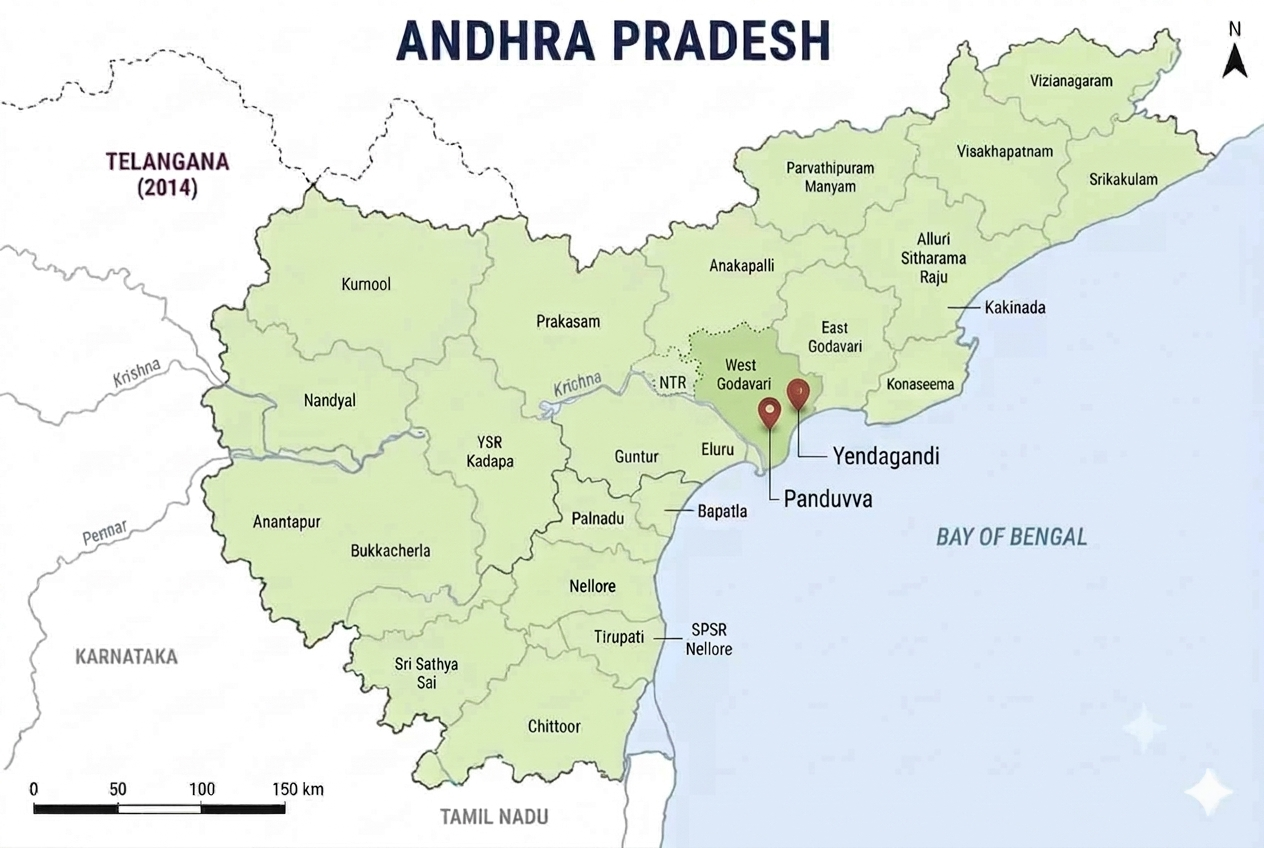
Undi Mandal, West Godavari district
Yendagandi is a big village, 15 km from the Undi Mandal headquarters and 13 km from Bhimavaram, the District headquarters. Panduvva is 12 km from Undi Mandal headquarters and 18 km from Bhimavaram.
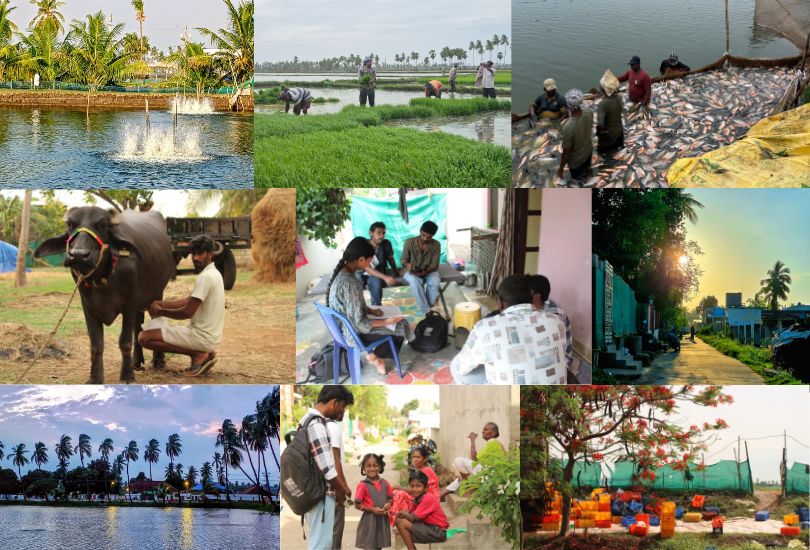
West Godavari is a district of high-productivity lowland agriculture and fish and shrimp aquaculture. In respect of the incomes from these two productive sectors, it is among the most prosperous districts of India.
The Foundation conducted sample surveys in both the villages. After a houselisting survey which covered all the households in the villages, we conducted a comprehensive socio-economic survey covering about 20 per cent of the total households. The sample size was 112 households in Panduvva and 259 households in Yendagandi.
The dominant landowning caste is Raju. Kapu is another dominant caste in the two villages. Other Backward Castes (OBC) include Turupu Kapu, Setti Balija, Kalinga, Yadava, and Koppula Velama. Scheduled Caste households constituted 25 per cent of the all households in the two villages. Landlessness is widely prevalent across all caste groups in the village, particularly among Dalit and OBC households.
Rice is cultivated in two seasons, Sarwa (July to November) and Dalwa (January to April). It is entirely dependent on canal irrigation from the Godavari Delta System. Tenancy is widely prevalent in rice and shrimp cultivation. Rice is mainly cultivated by OBC households on leased-in land.
Workers from West Bengal, Assam and other States migrate in large numbers to these villages. Seasonal migrant workers from West Bengal transplant rice and workers from Assam work in shrimp/fish aquaculture on a long-term basis.
A number of village residents are engaged in casual and salaried employment in non-agricultural work both within and outside the villages, and in nearby urban centres such as Bhimavaram, Tadepalligudem, and Attili.
Many young persons leave the village permanently, particularly from among the Raju caste. A substantial number of women from the village work in the Gulf Cooperation Council (GCC) countries. There are also a substantial number of non-resident Indians associated with households resident in the village.