
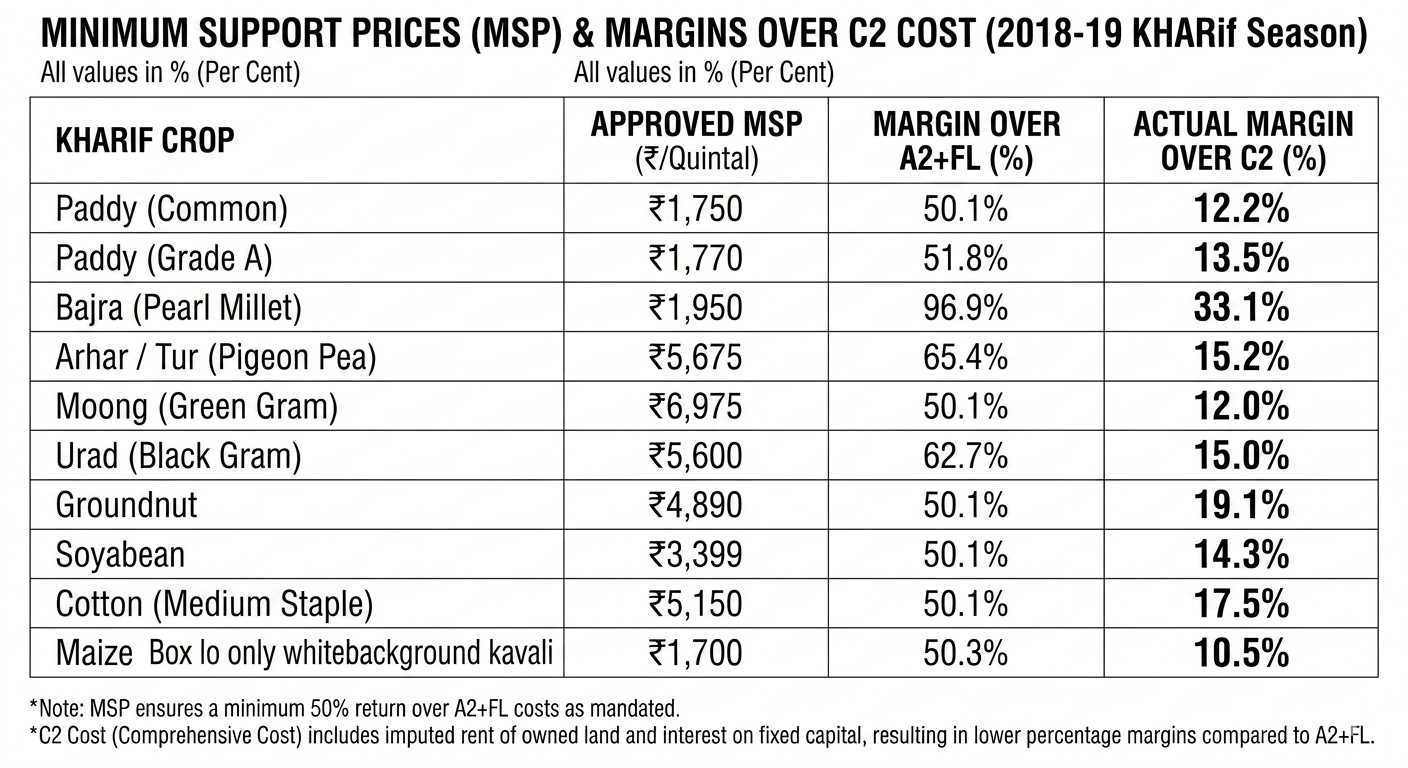
The Union Government announced minimum support prices (MSP) for 17 agricultural commodities (14 kharif crops) on July 4, 2018. The announcement came in the backdrop of the assurance provided by the Prime Minister to sugarcane farmers that the Government is going to provide MSP for kharif crops at one and half times of production cost. However, a closer look at the MSP reveals that for no crop was MSP more than 50 per cent of production cost.
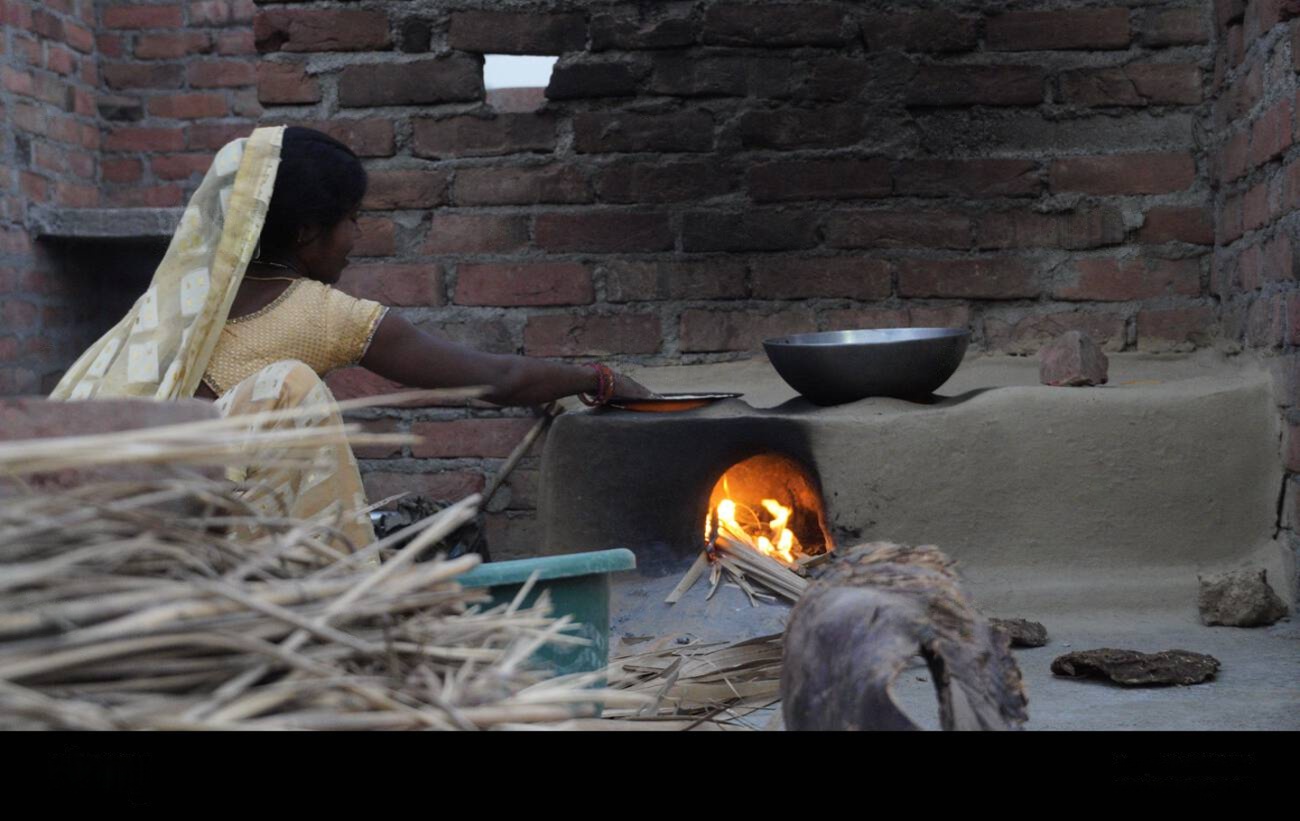
Sources of Energy and “Time-Poverty” Among Rural Women
It is well known that women play an integral role in the procurement as well as use of cooking energy, particularly from biomass. Existing gender roles within households impose a differential burden on men and women, with women having to bear most of the adverse effects of time-consuming and unsafe sources of energy for cooking and lighting.

Women’s Education in Odisha: A District Profile
Data from the fourth round of the National Family Health Survey 2015-16 (NFHS-4) show that education of girls and women continues to be neglected in rural areas of Odisha. District Fact Sheets from NFHS-4 show that every second female aged 6 and above in rural areas of six districts of south Odisha had not attended school.
A Note on Farm Harvest Prices
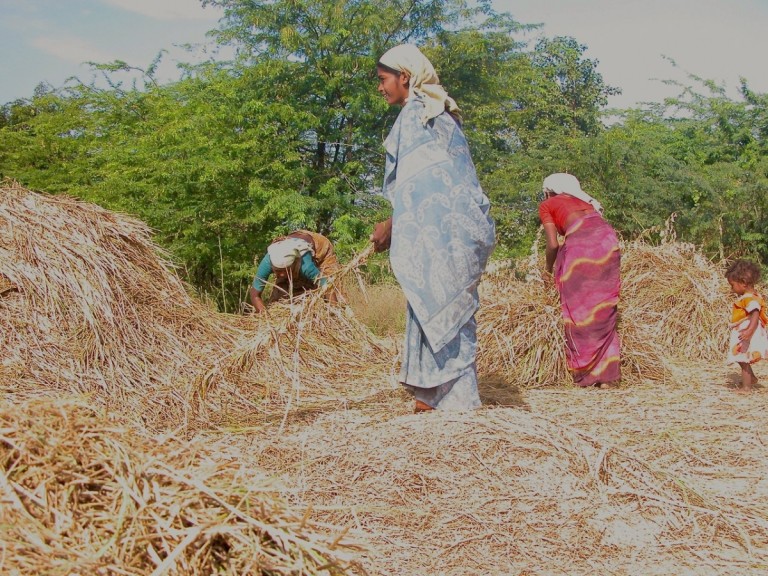
Farm Harvest Price or FHP is a critical variable in determining incomes of farmers from crop production. Farm harvest prices are also used to estimate the contribution of agriculture to national incomes. In this post, we examine how farm harvest prices are defined, collected and reported in India.

Does Market Intervention Scheme Really Help Potato Farmers?
Potato prices are volatile. In January 2018, because of very low prices, potato farmers abandoned their produce in large numbers in villages of Uttar Pradesh. Some farmers even dumped their produce in front of the Uttar Pradesh Chief Minister’s residence to register their protest.

“How do Small Farmers Fare?” in Journal of Economic Literature
The Book titled “How do Small Farmers Fare? Evidence from Village Studies” finds a place in the list of annotations that appear in the December 2017 issue of the Journal of Economic Literature (Vol. 55, No. 4).

The WTO and Food Security: Beyond the 11th Ministerial Conference
At the 11th Ministerial Conference (MC 11) of the WTO in 2017, member countries engaged on eight issues related to agriculture. The possibility of finding a permanent solution to the issue of public stockholding for food security purposes failed, as talks at the MC 11 collapsed due to the divergent views of member countries as well as strong opposition by the US.
Agriculture in Budget 2018-19
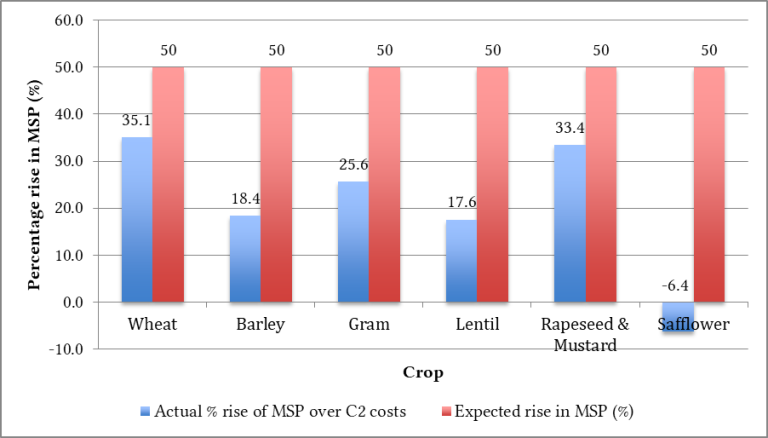
The performance of the agricultural sector under Narendra Modi would be judged in 2019 by a single indicator: his grand promise to double per capita agricultural incomes between 2015 and 2022. However, available data does not indicate any satisfactory progress towards that goal. The poor growth rate of agriculture in 2017-18 had resonated in the surge of farmer’s protests over the last few months.
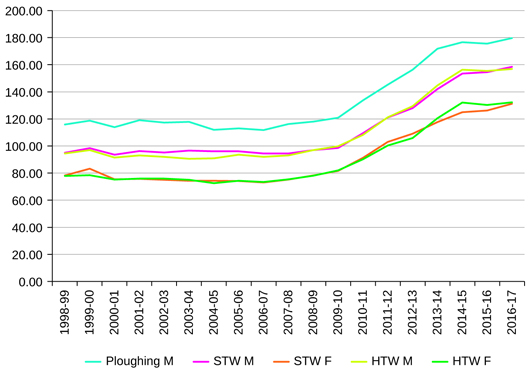
Trends in Wage Rates in Rural India
Most workers in India are dependent on semi-skilled and unskilled manual work for their livelihoods. According to the latest Rural Labour Enquiry Report, about 40 per cent of rural households derived their income from manual work. In a recent research article, Professor Yoshifumi Usami and I have examined trends in rural wage rates over the last 18 years (Das and Usami, 2017).

Paltry Returns
The sequencing of chapters and their content ensures that the book emerges as a coherent whole rather than a disjointed set of contributions, often a feature of edited books. The data it uses has been collected through a socio-economic census of 17 villages located in different agro-ecological zones in nine large states of India.